Trump Calls U.S. GDP Revision “Fake”; BEA Says Second Estimate Uses New Data
President Donald Trump accused the Commerce Department of manipulating pre-election GDP figures, but the BEA says its November 25 second estimate reflected new source data and routine revisions.
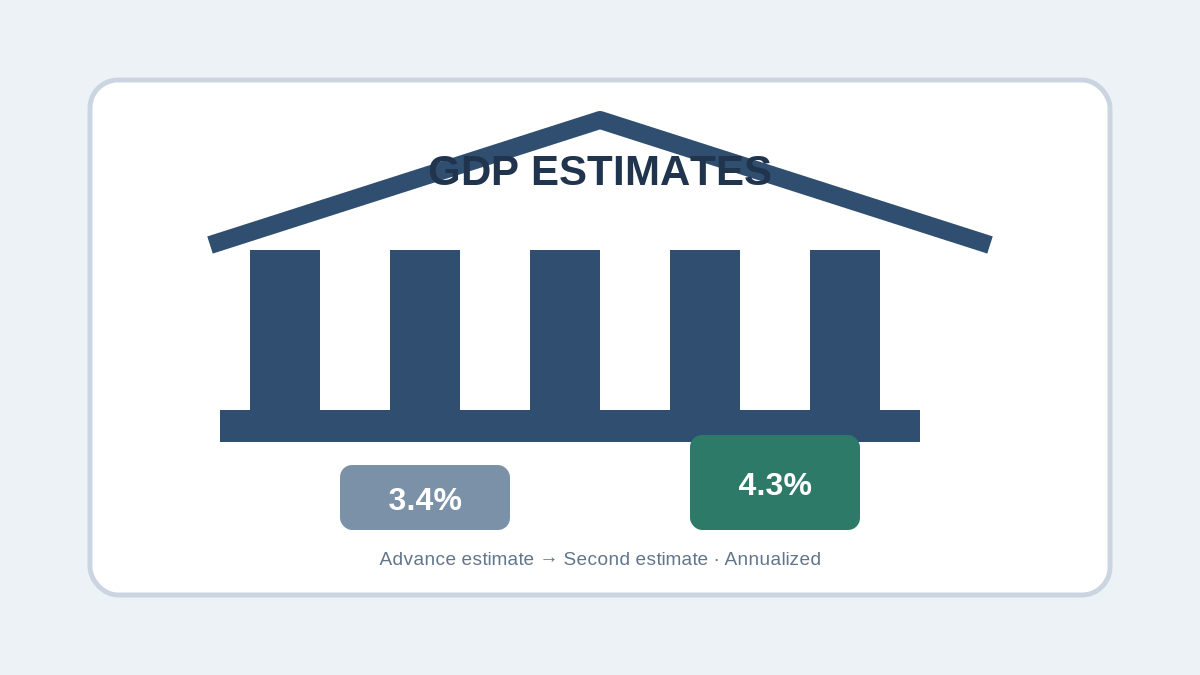
WEST PALM BEACH, Florida, November 27, 2026 — President Donald Trump has accused the Commerce Department of deliberately publishing incorrect economic figures before the November 3 midterm elections and called for an investigation. The allegation followed a routine second estimate that raised third-quarter U.S. gross domestic product growth to 4.3% from the earlier 3.4% estimate.
The Associated Press reported that Trump offered no evidence that the revision was politically motivated. The Bureau of Economic Analysis (BEA), which publishes the figures, regularly updates GDP estimates as more complete source data become available. The agency’s November 25 release identified the figure as the second estimate for the July–September quarter and explained the sources of the revision.
What changed in the GDP estimate
The BEA’s advance estimate, released October 29, put annualised real GDP growth at 3.4%. The second estimate, released November 25, raised that rate to 4.3%. The revision was primarily driven by stronger estimates for investment and consumer spending. Government spending also contributed to growth, while a decrease in exports partly offset the increase.
The 4.3% figure is an annualised rate: it expresses the quarter’s change at a pace that would result if the same quarterly rate continued for a full year. It does not mean the economy produced 4.3% more output in a single month.
Why GDP estimates are revised
The first estimate is produced before all source information is available. Later estimates incorporate additional and revised data from other statistical programmes. In its technical notes, the BEA said the investment revision was led by intellectual-property products, including software, using revised producer-price information. The consumer-spending revision reflected new and revised Census Bureau retail and services survey data.
The BEA has scheduled a third estimate for December 23, 2026. That release will incorporate further source information. The sequence of advance, second and third estimates is part of the agency’s published process; a revision does not by itself show that the earlier estimate was fabricated or politically altered.
What Trump alleged — and what is established
According to AP, Trump described the earlier figures as “fake” and said he wanted an investigation into why the higher estimate was not published before the election. The Commerce Department did not immediately respond to AP’s request for comment. The BEA release itself describes the revision as a result of updated source data, and AP reported that the agency’s regular revision schedule is set in advance.
There is an important distinction between criticising the timing or accuracy of an economic estimate and demonstrating deliberate political interference. The public evidence cited in the reporting establishes that the second estimate was higher and that the agency revised the underlying data. It does not establish that officials manipulated the first estimate to influence voters.
Why the dispute matters to markets and the public
GDP estimates influence business planning, forecasts, interest-rate expectations and public debate about economic performance. Investors and policymakers use the data alongside employment, inflation, income and spending measures. If confidence in official statistics is weakened without evidence, it can make it harder for households and companies to distinguish routine statistical updates from genuine errors.
The GDP revision also does not settle whether households feel better off. National output can rise while some consumers continue to face high prices or uneven job prospects. GDP is one measure of aggregate production, not a complete scorecard of household financial well-being.
What to watch next
- The BEA’s third GDP estimate scheduled for December 23.
- Any formal response from the Commerce Department to the president’s call for an investigation.
- Other economic releases, including inflation, employment and consumer-spending data, that provide a broader view than GDP alone.
For now, the documented change is a standard second-estimate revision from 3.4% to 4.3%. The allegation of intentional manipulation remains an allegation; no supporting evidence was presented in the AP report.
- Associated Press: Trump calls the pre-election GDP figures fake and demands an investigation (November 27, 2026)
- U.S. Bureau of Economic Analysis: GDP second estimate, third quarter 2026 (November 25, 2026)
- U.S. Bureau of Economic Analysis: GDP advance estimate, third quarter 2026 (October 29, 2026)
Editorial note: This report distinguishes reported data, official releases and analyst opinion. Market-flow figures are attributed to the source data provider; political allegations are attributed and are not presented as established fact.
Related coverage: Q3 GDP data and what the 4.3% estimate means · Latest U.S. news